Volunteering with older adults is not limited to distributing supplies or organising festival events: it can mean returning each week to listen, read, play a game, solve a phone problem or help staff run an approved activity. By the end, you will know which form of volunteering suits you, what benefits it can create for you and residents, and how to contribute without crossing care, privacy or safety boundaries.
Key takeaways
- Commit to a regular visit schedule residents can rely on.
- Choose supervised tasks such as conversation, games, reading and cultural activities.
- Use Marathi, Hindi or English according to each resident’s comfort.
- Never provide medicines, lifting assistance or clinical care without staff direction.
What does volunteering with older adults in Pune involve day to day?
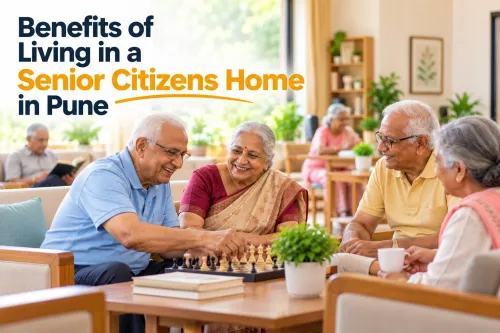
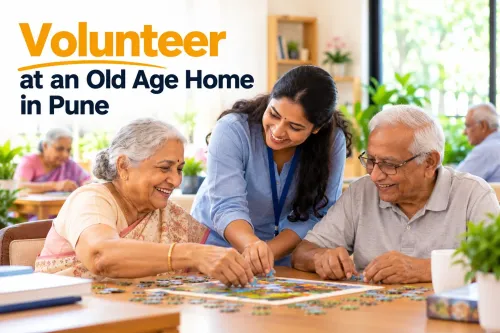
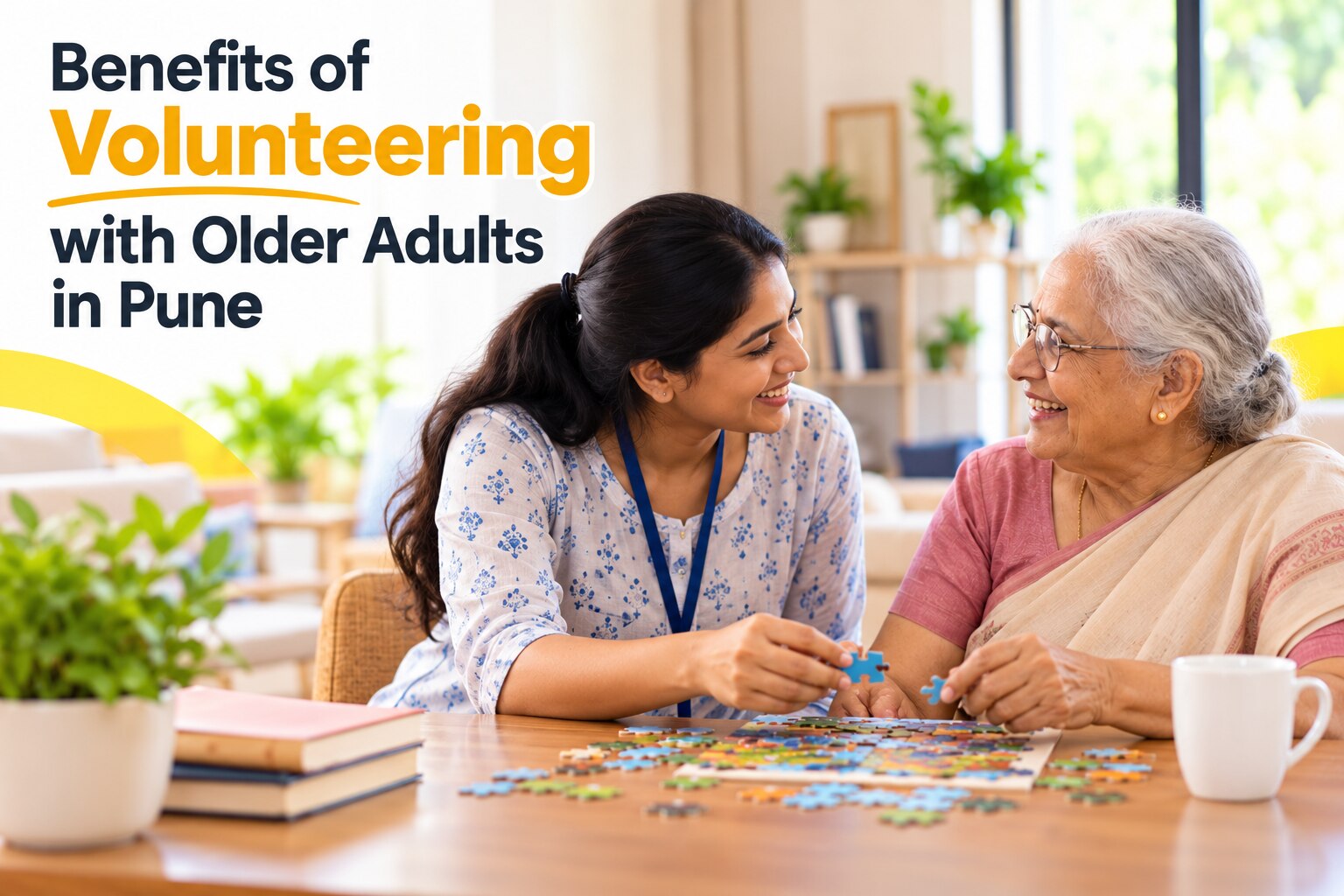
Day to day, volunteering at a volunteer old age home in Pune means dependable companionship alongside practical, supervised help. Speak with residents in Marathi, Hindi or English, read aloud, play board games, cards or puzzles, and join music, festivals and cultural activities.
Residents may value being remembered, listened to and included in ordinary conversation as much as a material donation.
| Activity | What you may do | Check before starting |
|---|---|---|
| Conversation and reading | Talk, read newspapers or books aloud, or assist a recreational session | Ask the resident’s language preference, hearing or vision needs, and fatigue level |
| Games, music and walks | Play cards, puzzles or music; accompany an approved walk | Confirm mobility aids, route safety and staff approval |
| Digital help | Support smartphones, video calls and digital payments | Let the resident enter their own details; never handle money, passwords or banking transactions |
| Meals and errands | Sit with someone at mealtime or complete a simple errand authorised by staff | Ask about dietary instructions and the errand’s limits |
| Administration | Help with filing, reception, attendance records or event administration | Follow confidentiality and access rules |
Staff remain responsible for transfers, lifting, personal care and clinical needs. A resident using a walker or wheelchair may need trained assistance, not an enthusiastic hand. Ask what the person wants, allow extra response time, reduce background noise and stop when fatigue appears. Social contact is the work, not an optional extra.
What benefits can volunteering bring to you and older adults?
The practical answer to “volunteer at old age home benefits in Pune” is yes: the value extends beyond feeling helpful. You practise listening, clear communication and patience while adapting conversations and activities to different abilities.
You also gain intergenerational understanding, social connection and a clearer awareness of ageing-related needs. Elder care volunteering in Pune can show you how hearing loss, reduced mobility, memory changes and loneliness affect everyday participation.
Studies associate volunteering with wellbeing, life satisfaction, social functioning and fewer depressive symptoms. However, a systematic review of 40 studies found limitations in study quality and causality, so volunteering does not guarantee better mental health.
Older adults can benefit through:
- Regular companionship and conversation that reduce social isolation
- Cognitive stimulation through puzzles, games, reading and recall
- Sensory stimulation through music, familiar voices and cultural activities
- Help using smartphones, video calls and other technology
- Participation in Pune’s festivals, language and local culture
- Stronger links with neighbours, volunteers and the wider community
A dependable weekly or fortnightly visit usually helps more than an occasional large event. Continuity lets trust grow, helps residents feel remembered and allows you to notice changes in mood, communication or participation. Repeatedly cancelling a promised visit can deepen disappointment for someone already experiencing loss or disconnection.
Which Pune volunteering route and residential home should you choose?
Choose the route that matches your time, skills and comfort with care procedures. A neighbour may need groceries or a regular check-in; an NGO may place you in structured outreach or activity projects; a residential home involves induction, consent procedures, visiting hours and coordination with care staff.
| Option | Typical work | Main commitment |
|---|---|---|
| Neighbour support | Groceries, errands or a scheduled check-in | Informal agreement and clear boundaries |
| NGO programme | Outreach visits, activity projects or community events | Organisation-led training and assigned duties |
| Residential care home | Companionship, approved activities or administration | Induction, resident consent and staff coordination |
Before choosing elder care volunteering in Pune, ask the coordinator:
- What are the current needs, and what minimum age applies?
- Are identity checks, orientation or a police verification required?
- How long is each shift, and what dress rules apply?
- What is the cancellation procedure?
- Is transport or travel reimbursement available?
- Which languages do residents use: Marathi, Hindi, English or another language?
Identify a volunteer old age home in Pune whose requested work matches your skills. Do not arrive with unrequested food, clothes or entertainment; the home may need dependable conversation partners, readers, digital-literacy helpers or filing support instead.
Arpan Old Age Home in Vadgaon Budruk, Kudale Baug, Pune is one residential setting to assess through its coordinator by asking what residents need before scheduling visits.
- Make contact and describe your availability.
- Complete orientation and consent training.
- Agree to a regular slot.
- Learn emergency and safeguarding contacts.
- Begin only after approval.
How can you help seniors as a volunteer without replacing professional care?
If you search “help seniors volunteer in Pune,” remember that companionship supplements professional care; it does not replace it. Work only within your induction, the resident’s consent and the coordinator’s instructions.
Unless the organisation has explicitly trained and authorised you, do not:
- Give medicines or change dressings.
- Make medical decisions.
- Handle cash or valuables.
- Lift a resident or transfer someone from a bed or floor.
- Provide bathing or toileting help.
- Arrange outside services independently.
Tell the responsible staff member promptly about pain, fever, a fall, a medication error, a pressure sore, sudden confusion or a suicidal statement. Report the concern; do not diagnose, treat or promise confidentiality.
Safeguarding signs include unexplained injuries, fear of a particular person, missing possessions, sexualised behaviour, threats, neglect and sudden mood changes. Use the facility’s designated safeguarding route, and do not investigate privately or confront anyone.
Wash your hands before and after visits, stay away when ill, follow mask and visitor rules, and bring no unapproved food. Consent to talk does not authorise photographing, posting, fundraising, sharing a health history or contacting relatives. Keep names, phone numbers and personal stories private unless the facility’s consent process specifically permits the activity.
What makes a volunteer visit respectful, safe and dependable?
Arrive at the agreed time, or tell the coordinator as early as possible if you must cancel. Use respectful language, ask before touching a resident or changing an activity, and allow extra time for replies. Reduce background noise for anyone with hearing loss or communication difficulties.
For dementia-sensitive communication, use short sentences, do not argue about a mistaken belief, offer two simple choices, and ask staff how the resident communicates best.
Get consent before conversation, reading, games, walks or digital assistance. Before any outing or activity involving a walker or wheelchair, obtain staff approval. Fatigue, uneven surfaces and falls risk make unsupervised lifting, transfers or physical assistance unsafe.
| Dependable practice | Unsafe alternative |
|---|---|
| Ask the resident’s permission | Assume participation |
| Follow the approved activity | Improvise a walk or outing |
| Keep language short and calm | Correct or debate confusion |
| Reduce noise and wait for replies | Rush or speak over the resident |
For anyone searching “volunteer at old age home benefits in Pune,” the strongest benefit is dependable human contact. The same standard applies when you help seniors volunteer in Pune: record attendance and concerns through the approved process, note whether the resident enjoyed or declined the activity, and choose a realistic weekly or fortnightly slot.
A bounded commitment helps both people more than promises you cannot sustain.
Frequently asked questions
What does volunteering with older adults in Pune involve day to day?
It can include speaking with residents in Marathi, Hindi or English, reading aloud, playing board games, cards or puzzles, and joining music, festivals and cultural activities. Practical help should remain supervised by care staff.
What benefits can volunteering bring to you and older adults?
Regular companionship can reduce isolation and give residents dependable social contact. Volunteers can build communication, listening and teamwork skills while learning how to support older adults with patience and respect.
Which Pune volunteering route and residential home should you choose?
Compare residential homes, community groups and one-time drives by checking visit schedules, staff supervision, permitted activities, travel time and safeguarding procedures. Choose a route you can follow consistently rather than one that only fits a single visit.
How can you help seniors as a volunteer without replacing professional care?
Focus on companionship, activities and approved practical tasks. Do not diagnose, administer medicines, handle personal care, transfer residents or respond to emergencies unless trained and explicitly directed by qualified staff.
What makes a volunteer visit respectful, safe and dependable?
Arrive when promised, follow staff instructions, ask before touching or photographing anyone, protect private information, respect language and cultural preferences, and report health or safety concerns to the care team.